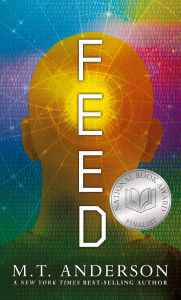
Anderson, M. (2002). Feed. Cambridge, MA: Candlewick Press.
Titus and friends take a trip to the moon for spring break. It is the future and it is possible for anyone to travel to the moon and other planets. It's frightening and fascinating, Feed is the story of what our future may be. Society is now completely enveloped in “the feed,” every song, movie, advertisement, clothing, hairstyle is now all we are part of. Basic and meaningful communication is no longer the same. A restful night’s sleep is also infiltrated with messages and texts. Violet, a girl of an economically low status was installed with “the feed,” well after the optimal time. Knowing she does not have a lot of time to live, she comes to find out what she wants to live for. In trying to confuse the feed, she tests the limits of her friendship with Titus. Being completely enveloped in the feed and taught that all things are disposable, Titus and Violet’s relationship eventually comes to a whimpering end.
A warning for society is what this book should be called. From the fragmented language they speak to the human price they pay for living this way, the feed has consumed all feelings and has essentially turned people into robots. I was depressed as I read this book. The conflict seemed to be how society is living. Titus cannot see the shallowness of society, Violet forces him to and by doing so he chooses the feed over her. Even though Violet dies in the end, she at least lived a truly human life, whereas Titus and his friends never will.
This science fiction novel provides an excellent opportunity for middle school and high school students to research the effects of technology dependence. Many will relate on how individuals can be so dependent on technology that they can hardly function in their daily lives without it.
Readers may also enjoy, How I Live Now by M. Rosoff.

No comments:
Post a Comment