Chapter 1
Sharing literature with children is mainly for fun. While we do this, children develop language acquisition. Children should read for at least 20 minutes a day at home. This will help with language development to be a natural process. Another great reason to share literature with children is to help develop life long readers. Reading fiction books with children helps them to develop empathy and reading autobiography books helps them learn about themselves if it reflects who they are. Literature develops the imagination, serves as a window and opens curiosity, sparks up question(s) and can transmit culture.
While reading this chapter, it reminds me of the many benefits of sharing literature with children. It helps to really understand the outcome, especially when I evaluate YA literature in the areas of culture and diversity. I need to keep in mind the importance of exposing the students to all cultures as much as possible. In addition sharing this importance of benefits to our teachers, administrators and parents, will be something I plan to do.
Chapter 2
This chapter focused on the four categories of young people's literature. They are Children's Literature, Middle Grade, Young Adult and New Adult. Children's literature targets 0-8 years of age, includes your easy readers, picture books, wordless picture books, illustrated chapter books and early chapter books. Middle grade/Tween books are for ages 8 to 12. There is confusion amongst many about Middle Grade and Middle School. Middle school is not a category of literature. Next, we have Young Adult for the ages of 13 through 18 years of age. Many middle school students tend to have a hard a time finding appropriate reading material. Librarians must be aware of the content of books before purchasing them for the collection. Last, we have New Adult Literature, which is meant for an audience between the ages of 18 and 30. These books cover adult issues and are edgy. Most have characters that are facing new challenges and experiences.
This chapter makes me realize that middle school librarians have to do a real thorough job when deciding whether some books are appropriate for their students. Some content in YA books might not be appropriate for some or most. When working as a librarian, I need to do research before buying books to add to my collection because once a book it placed on the shelf, it's something that will be available for ALL patrons. There are no exceptions to books being only for particular students and not other students, due to intellectual freedom.
Chapter 3
There are 2 types of genres: fiction and nonfiction. Everything else is a subgenre. Within these two genres we have more specific types in each. For example, Fiction can branch off to realism and fantasy. Realism can then be broken into realistic and historical. Fantasy breaks down into modern or traditional. Nonfiction can also be broken down to subgenres such as informational, biographical, narrative nonfiction and expository nonfiction. In addition subjects and categories are not genres.
We also have a wide range of formats, which we see librarians using as genres, which they are not. These include poetry, drama, novels, chapter books, short stories, picture books, and graphic novels.
Reading this chapter was really an eye opener. There is an importance in distinguishing between genres, formats, and categories. As a future librarian we must be true when labeling our libraries by genres and not format or subject. This will help patrons be successful locating material needed.
Chapter 4
An important element of YA literature is the main character. Usually this character is a young protagonist who is very independent. This character faces consequences based on the decisions made and in turn will significantly change the character's life. The other element is point of view. This is the adolescent and the plot which includes direct confrontation. YA literature mirrors concerns that adolescents face and draw upon a sense of how they develop.
This chapter gave insight on the elements of YA literature and understanding of why young people enjoy reading YA books. Many patrons relate to the characters, may be curious about the topic(s) or it's a window to answer questions they may have.
Chapter 5
Main focus is adolescent development. It begins with physical development due to puberty. It's a difficult time for many as the ask am I normal? and how am I suppose to look? In addition, there is intellectual development and how students go from concrete to abstract. Students who are in the concrete level might not understand the theme of a book. Kohlberg's theory in development of morals addressed three stages: pre-conventional, conventional, and post-conventional. In the pre-conventional stage, we look at morals based on a reward and punishment perspective. Many adults still function at this level; which is very surprising. In the conventional level, we follow the rules set out by society or religion and we don't question them. Last, the highest level, post-conventional, we recognize the laws but choose not to follow them because we see them as wrong.
It's important to understand the different theories of development. It will help us address the needs of our students. Also, we need to help students find YA literature that focuses on where they are at. This will enable us to create life long readers and will instill joy in reading their books.
Wednesday, June 21, 2017

Sunday, June 11, 2017
Annie on my mind

Garden, N. (1982). Annie on my mind. New York: Farrar, Straus and Giroux
In this realistic tale of fiction we meet Liza Winthrop and Annie Kenyon. Two girls who form an instant bond through their shared interests of history and art. They come to realize that that there is something deeper between them, an attraction that neither can escape. Despite their worries of disappointing or hurting their families, they continue onward with their relationship going into territory that neither girl has had any experience with. Fearing the worst, but finding it impossible to escape, they unexpectedly find acceptance amongst some and disappointment among others.
The story was told through the eyes of Liza and the turmoil she was going through in coming to terms with the fact that she was a lesbian. In this story we can see Havighurst's Theory of developmental tasks play out before our eyes. Each girl was struggling with defining their appropriate sex role. Each girl knew they were not what was socially acceptable. They were always painfully aware of what others might see them doing out in society; the actions of lesbians. They were afraid of what their friends might think and say about them, but worst of all how their families might feel about their sexual persuasion.
The story was told through the eyes of Liza and the turmoil she was going through in coming to terms with the fact that she was a lesbian. In this story we can see Havighurst's Theory of developmental tasks play out before our eyes. Each girl was struggling with defining their appropriate sex role. Each girl knew they were not what was socially acceptable. They were always painfully aware of what others might see them doing out in society; the actions of lesbians. They were afraid of what their friends might think and say about them, but worst of all how their families might feel about their sexual persuasion.
This story is most appropriate for middle to high school students. It reveals a good lesson in acceptance of others and their right of love as they choose. Many students can connect to the joyful, painful, and complex time of life in which they are attempting to connect and identify with in their own lives.
Similar reads
The Miseducation of Cameron Post by Emily Danforth.
Lily and Dunkin
Lily and Dunkin each tell their stories from their perspective in this book about growing up into the person you want to be. Lily whose real name is Tom and Dunkin whose real name is Norbert are both considered to be unusual eight graders. Lily is a boy who identifies with being a girl and is going through the transgender process and Dunkin has bipolar disorder which leaves these two with self-image problems. Both have supportive mothers and dads that have a difficult time relating to them. Dunkin who is big feels awkward and Lily feels like she’s trapped inside the wrong body, but despite their differences their similarities allow them to develop a sweet friendship amongst their peers who are not always ice or considerate.
This book delves into two different topics that most people are not comfortable with or understanding of and presents the storyline in an endearing manner. Readers are able to see what it is like to feel left out of a place or feel trapped in your own body unsure of who you are. They also see what it’s like to suffer with a mental disorder, with no total control of your thoughts and actions, and how not using the medication that is given to help can become harmful. It also touches on some other realistic topics like bullying, family, and grief.
Great book to use for making connections when reading. It can be used to challenge students and get them out of their comfort zone to understand the feelings of others. Readers can generate a list and make text to self connections as they read about the characters and their struggles.
Six Crows

Bardugo, L. (2015). Six of Crows. New York: Henry Holt and Company.
Kaz Brekker, a 17 year old is also known as Dirtyhands. He is second in command of a gang known as the Dregs. Kaz and his gang are given the difficult task of breaking into the prison, grabbing a scientist Professor Maguffin and safely making it back out of the prison. He is capable of creating weapons of war that can upset the balance of power. While in the prison they are trapped but eventually get away with what they were after.
This book is intended for readers ages 13 and up. Bardugo draws readers into this fantasy world as Kaz and his gang overcome the challenges of breaking into the prison. The author takes the reader on a journey as each character deals with their own internal conflicts while successfully trying to escape from prison. The author in addition has created a high fantasy that quickly enthralls readers with richly, detailed characters engaged in twists and turns of an unpredictable plot. Readers will eagerly continue with the sequel.
This book is intended for readers ages 13 and up. Bardugo draws readers into this fantasy world as Kaz and his gang overcome the challenges of breaking into the prison. The author takes the reader on a journey as each character deals with their own internal conflicts while successfully trying to escape from prison. The author in addition has created a high fantasy that quickly enthralls readers with richly, detailed characters engaged in twists and turns of an unpredictable plot. Readers will eagerly continue with the sequel.
The coldest girl in Coldtown

Black, H. (2013). The coldest girl in Coldtown. New York: Little, Brown Books for Young Readers.
The Coldest Girl in Coldtown is a vampire book. It portrays vampirism as a disease. If a person got bit by a vampire the person becomes cold. If you become infected symptoms start arising within 48 hours and the main symptom is craving human blood. There is a way to beat the disease and that is by avoiding blood for 88 days. The main character Tana has a personal experience with going cold. Her mother went cold when she was a child and ended up dying. Tana is a child that typically doesn't buy into the Coldtown parties. But one night she attends a lock-in party and when she wakes up everyone is dead except her ex and another boy that she doesn't know. The boy ends up being another vampire that is dangerous. Tana's goal throughout the book is to survive and to make amends with the passing of her mother.
This supernatural fantasy is intended for middle and high school students. Readers will gain an understanding of life as a vampire. Although vampires are thought of as bloodthirsty, readers will notice a love story unfold between Gavriel and Tana. Their commitment towards one another reflects how good triumphs over evil. Great read for teachers and counselors to portray ways to young adults who have made mistakes in the past and need to find a way to overcome those mistakes.
Monday, June 5, 2017
My friend Dahmer
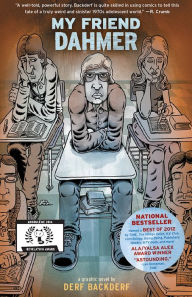
Backderf, D. (2012). My friend Dahmer: A graphic novel. New York: Abrams.
Reading about a serial killer named Jeffery Dahmer. It does not focus on his murders but instead Dahmer is being depicted for us from the eyes of one of his high school friends. It shows us that Dahmer was a very isolated kid when he was in high school. Dahmer also use to pretend to have epileptic fits. Which we eventually learn he is mimicking from his mother who suffers from depression and has bad ticks. Because Dahmer acted out he was seen as somewhat of a celebrity and had a group of followers who imitated his movements. Dahmer friends finally see that his behaviors are coming from his poor home life. His parents fought and eventually got a divorce and through it all Dahmer was ignored and isolated. Dahmer felt more isolated because of his sexuality, he was gay and did not want to let anyone know. But being gay was not the reason he was a serial killer, his fantasies was making love to a dead man. Dahmer knew this wasn't right and turned to alcohol to dull the urges. Dahmer's friends could not believe that Dahmer was coming to school drunk. They refused to notice or they were choosing to ignore it. Once Dahmer graduated high school, he completely isolated himself from everyone and he picked up a hitchhiker who would become his first victim.This graphic novel is a great tool for middle and high school students. It highlights the negative effects of bullying and the importance of acceptance. It is a very deep book. It it shows how a child can fall through a system that is uncaring and unwilling to help. It shows that if one person would have stopped and tried to help Dahmer things might have turned out differently. A chilling memoir of horror and tragedy.
Similar reads
Long, M., & Venable, C. (2012). The silence of our friends. NY: First Second.
Feed
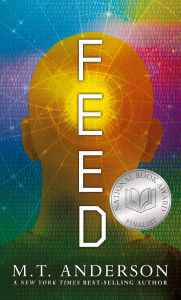
Anderson, M. (2002). Feed. Cambridge, MA: Candlewick Press.
Titus and friends take a trip to the moon for spring break. It is the future and it is possible for anyone to travel to the moon and other planets. It's frightening and fascinating, Feed is the story of what our future may be. Society is now completely enveloped in “the feed,” every song, movie, advertisement, clothing, hairstyle is now all we are part of. Basic and meaningful communication is no longer the same. A restful night’s sleep is also infiltrated with messages and texts. Violet, a girl of an economically low status was installed with “the feed,” well after the optimal time. Knowing she does not have a lot of time to live, she comes to find out what she wants to live for. In trying to confuse the feed, she tests the limits of her friendship with Titus. Being completely enveloped in the feed and taught that all things are disposable, Titus and Violet’s relationship eventually comes to a whimpering end.
A warning for society is what this book should be called. From the fragmented language they speak to the human price they pay for living this way, the feed has consumed all feelings and has essentially turned people into robots. I was depressed as I read this book. The conflict seemed to be how society is living. Titus cannot see the shallowness of society, Violet forces him to and by doing so he chooses the feed over her. Even though Violet dies in the end, she at least lived a truly human life, whereas Titus and his friends never will.
This science fiction novel provides an excellent opportunity for middle school and high school students to research the effects of technology dependence. Many will relate on how individuals can be so dependent on technology that they can hardly function in their daily lives without it.
Readers may also enjoy, How I Live Now by M. Rosoff.
Speak
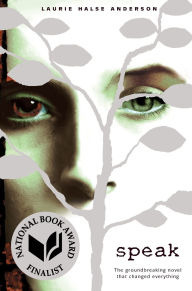
Anderson, L. H. (1999). Speak. NY: Farrar Straus Giroux.
Melinda is a high school student with a big secret. Last summer she was at a party and called the cops after she was raped. She left before the cops arrived and did not tell anyone of the incident. Unfortunately the students at school dislike her and bully her for breaking up the party they were all part of. When she is not in Art class, she is usually hiding in the janitor's closet. She hurts herself and refuses to speak. When she finally decides to tell her friend the secret, they doesn't believe her. After almost being raped a second time by the same boy, she builds enough courage to stand up and say something. At the end, Melinda realizes what has happened to her is not her fault and speaking up is necessary for her to begin healing.
This modern realistic fiction book tells a powerful story of violation. Great read for middle and high school students. This book stands as a warning not only to those who are violated but also to the violators. In addition, this book exposes the great life altering effects that can occur based on one decision. Teachers and counselors can utilize this book to discuss the importance of speaking and seeking help when faced with similar situations.
Hush and Wintergirls are other books readers of Speak might enjoy.
The absolutely true diary of a part-time Indian.

Alexie, S. (2007). The absolutely true diary of a part-time Indian. NY: Little Brown.
Arnold is a 14 year old boy who lives in an Indian reservation with his family. He was born with hydrocephalus and is often bullied because of his appearance. Rowdy is his only friend and also the school bully. Rowdy is also Arnold's protector. Arnold gets into some trouble at school and decides to move to another school made up of mostly white students. Not an easy decision to live by. Eventually he makes friends and makes the varsity basketball team. He faced many struggles throughout, including the death of his grandmother, sister and family friend.
According to Havighurst's theory of development: adolescents need to get along with peers, Arnold continually struggles with this. He fights both with Rowdy his best friend and with kids at the white school. It is a struggle that not only has to do with growing up, but also with how society and his tribe sees him.
This is a great book for students in 6th grade and above. It's a great modern realistic fiction story that gives a great vivid picture of an Indian boy growing up in the "rez".
Several themes are covered in this book including bullying, friendships, death, violence, and dreams. It can be used to teach many lessons, but most important it's a great resource to use to help students connect and learn about acceptance and self-motivation.
Readers may also enjoy: The Business of Fancydancing, a collection of short stories and poems by the author.
Book(s) with Similar Theme
Crowley, C. (2010). A.little wanting song. New York: Alfred A. Knopf.
Subscribe to:
Posts (Atom)